Kenya Showcases Community-Led Rangeland Restoration to Advance Biodiversity Conservation and the Kunming-Montreal Global Biodiversity Framework
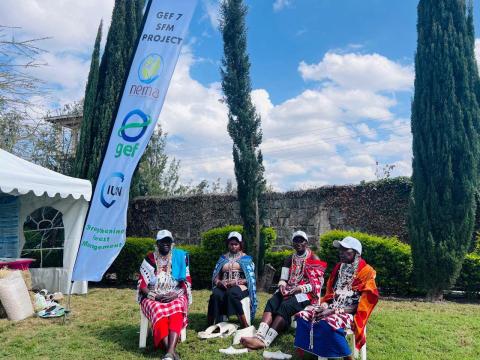
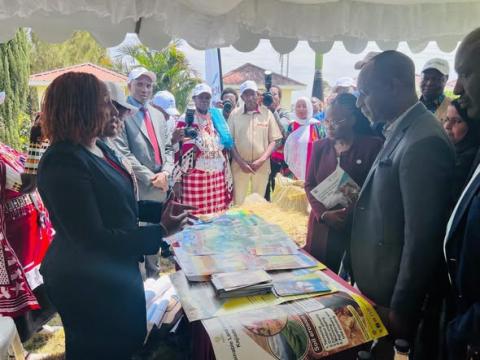
Kajiado County, Kenya – As the world marks the International Year of Rangelands and Pastoralists (IYRP 2026), the National Environment Management Authority (NEMA), in collaboration with its partners, is demonstrating Kenya's commitment to conserving biodiversity and restoring degraded ecosystems through community-led sustainable rangeland management in the country's Southern Rangelands.
Healthy rangelands are among Kenya's most important ecosystems, supporting pastoral livelihoods, conserving globally significant biodiversity, regulating water resources, storing carbon and strengthening resilience to climate change. Covering vast portions of Kenya's Arid and Semi-Arid Lands (ASALs), these landscapes are home to diverse wildlife species while sustaining millions of people who depend on livestock production and natural resources.
As the lead executing agency, NEMA, working in partnership with the South Rift Association of Land Owners (SORALO), Kenya Agricultural and Livestock Research Organization (KALRO), National Environment Trust Fund (NETFUND) and the African Conservation Centre (ACC), is implementing an integrated landscape restoration programme across Narok and Kajiado Counties.
The initiative is supported through the Global Environment Facility Seventh Replenishment (GEF-7) Sustainable Forest Management Impact Program, implemented by the International Union for Conservation of Nature (IUCN). The project promotes integrated forest and landscape management that simultaneously restores ecosystem health, strengthens community livelihoods and conserves biodiversity.
The programme is delivering a range of ecosystem restoration interventions, including rehabilitation of degraded rangelands to improve vegetation cover and ecosystem integrity, protection of critical water catchments to enhance water security, restoration of wildlife habitats, promotion of ecosystem-based approaches to climate adaptation and strengthening governance systems for sustainable natural resource management.
Community participation remains central to the project's success. Working closely with SORALO, local communities—particularly women's groups—are developing sustainable rangeland value chains that generate income while supporting ecosystem restoration and biodiversity conservation.
Among the innovative community-led interventions are Community Grassbanks, which provide strategically managed fodder reserves during drought periods. These grassbanks improve livestock survival, reduce grazing pressure on fragile ecosystems and enhance the resilience of pastoral production systems.
The project is also supporting Women's Indigenous Grass Seed Enterprises, where women collect, propagate, process and market indigenous grass seeds for rangeland restoration. These enterprises contribute to revegetation of degraded landscapes, improve ecosystem functionality, strengthen local seed systems and create green livelihood opportunities for rural communities.
The initiative demonstrates how biodiversity conservation and sustainable use of natural resources can deliver multiple benefits for both people and nature. Through collaborative landscape restoration, Kenya is enhancing ecosystem resilience, improving habitat connectivity, safeguarding ecosystem services and supporting the long-term sustainability of pastoral livelihoods.
The project directly contributes to the implementation of the Kunming-Montreal Global Biodiversity Framework (KMGBF) by advancing several global biodiversity targets, including:
- Target 2 – Restore degraded ecosystems through large-scale landscape restoration and rehabilitation of rangelands.
- Target 3 – Conserve biodiversity across landscapes by strengthening ecological integrity and habitat connectivity.
- Target 9 – Promote the sustainable use and management of wild species and biodiversity-based livelihoods that support pastoral communities.
- Target 10 – Enhance the sustainable management of agriculture and livestock production systems through sustainable grazing practices.
- Target 11 – Maintain and restore ecosystem functions and services, including water regulation, soil health and carbon sequestration.
- Target 21 – Strengthen knowledge generation, monitoring and information sharing through partnerships and community participation.
- Target 22 – Ensure the full, equitable and inclusive participation of Indigenous Peoples, local communities and women in biodiversity conservation and sustainable natural resource management.
Through strong partnerships among government institutions, local communities, conservation organizations and development partners, Kenya continues to demonstrate that sustainable landscape restoration is a practical pathway for achieving biodiversity conservation, climate resilience and sustainable development.
As the global community celebrates the International Year of Rangelands and Pastoralists, Kenya's experience reinforces the importance of investing in community-driven restoration initiatives that recognize pastoralists as custodians of biodiversity and partners in achieving the goals of the Kunming-Montreal Global Biodiversity Framework
.
Kenya is globally recognized for its exceptional diversity of indigenous livestock genetic resources, which form an integral component of the country's biodiversity and natural heritage. From trypanotolerant cattle that thrive in tsetse-infested areas to heat- and drought-adapted camels—of which approximately 99% are indigenous breeds—Kenya's livestock genetic diversity has evolved over centuries to withstand harsh climates, endemic diseases and variable grazing conditions.
These indigenous breeds, including the Boran, East African Zebu, Sahiwal, Red Maasai Sheep, Galla Goat, Turkana Goat, Somali Camel and indigenous poultry, possess unique genetic traits that enhance resilience to climate change, disease resistance, efficient utilization of poor-quality forage and adaptation to arid and semi-arid ecosystems.
Beyond their economic value, indigenous livestock support food and nutrition security, sustain pastoral and agro-pastoral livelihoods, preserve cultural heritage and contribute to the sustainable management of Kenya's rangelands. Their continued conservation is therefore essential for maintaining ecosystem resilience, strengthening climate adaptation and safeguarding the genetic diversity needed for future livestock improvement.
Through national conservation programmes, community-based breeding initiatives and sustainable rangeland management, Kenya is promoting the conservation and sustainable use of livestock genetic resources in line with the Kunming-Montreal Global Biodiversity Framework (KMGBF). These efforts contribute directly to Target 4 by conserving genetic diversity within species, Target 5 through sustainable use of biodiversity, Target 10 by promoting sustainable livestock production systems, and Target 13 by supporting the fair and equitable sharing of benefits arising from the utilization of genetic resources.
The Kenya Biodiversity Clearing-House Mechanism (CHM) continues to facilitate knowledge sharing, documentation and dissemination of information on livestock genetic diversity, supporting evidence-based decision-making and strengthening national implementation of the Convention on Biological Diversity.