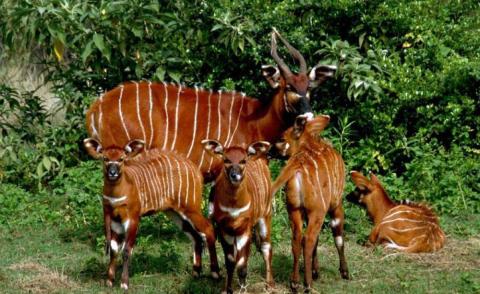
The return of the mountain bongo in Kenya


The recent reception of four mountain bongos at Jomo Kenyatta International Airport marks a significant milestone in Kenya’s ongoing efforts to restore one of its most critically endangered species. Led by Emilio Mugo, Chair of National Environment Management Authority, the event brought together high-level government leadership, including Musalia Mudavadi and Rebecca Miano.
The bongos, donated by the Czech Republic, are part of a long-term international conservation partnership aimed at reintroducing and stabilizing populations of the mountain bongo (Tragelaphus eurycerus isaaci)—a species endemic to Kenya’s montane forests, including the Aberdares and Mount Kenya ecosystems.
Why the Mountain Bongo Matters
The mountain bongo is not just a rare antelope; it is a flagship species for Kenya’s forest ecosystems. Its presence signals healthy, well-functioning habitats. However, due to habitat loss, poaching, and human encroachment, its population has declined drastically, making it a priority for national and global conservation action.
This repatriation initiative supports ongoing breeding and rewilding programs, particularly within protected areas and sanctuaries, where bongos are carefully acclimatized before eventual release into the wild.
Link to the Global Biodiversity Framework (GBF)
This initiative directly contributes to the implementation of the Kunming-Montreal Global Biodiversity Framework, reinforcing Kenya’s commitment to halting and reversing biodiversity loss by 2030.
1. Species Recovery – GBF Target 4
The reintroduction of mountain bongos aligns with efforts to:
- Halt human-induced extinction of threatened species
- Recover populations of endangered species
By increasing the genetic pool and boosting population numbers, Kenya is actively working toward restoring a species on the brink of extinction.
2. Ecosystem Restoration – GBF Target 2
Mountain bongos depend on intact forest ecosystems. Their conservation:
- Encourages restoration of degraded forest habitats
- Strengthens ecosystem integrity in key water towers
This is especially relevant for areas like the Aberdare Range, which are critical for water regulation and climate resilience.
3. Sustainable Use and Community Benefits – GBF Target 5 & 9
Bongo conservation is increasingly linked to:
- Community-based conservation initiatives
- Ecotourism opportunities that generate local livelihoods
By involving local communities, Kenya ensures that biodiversity conservation also delivers socio-economic benefits.
4. International Cooperation – GBF Target 20
The donation from the Czech Republic highlights the importance of:
- Global partnerships in biodiversity conservation
- Resource mobilization and knowledge exchange
Such collaborations are essential for achieving GBF targets, especially for species that require intensive recovery programs.
Strategic Significance for Kenya
This effort complements Kenya’s implementation of its National Biodiversity Strategy and Action Plan (NBSAP) and demonstrates practical action toward:
- Reversing biodiversity loss
- Strengthening ecosystem resilience
- Enhancing Kenya’s leadership in global conservation
It also reinforces the role of institutions like National Environment Management Authority in coordinating biodiversity conservation and awareness.
“The return of the mountain bongo is more than a conservation milestone—it is a symbol of Kenya’s commitment to the Global Biodiversity Framework and a powerful reminder that through collaboration, restoration, and sustained action, we can bring our endangered species back from the brink.”