Lake Ol Bolossat Moves Closer to Becoming Kenya's Seventh Ramsar Site
Ol Kalou, Nyandarua County | 29–30 July 2026 – Kenya has taken another significant step towards strengthening wetland conservation following the successful validation of the Ramsar Information Sheet (RIS) for Lake Ol Bolossat, bringing the country's only natural freshwater lake in Central Kenya closer to designation as its seventh Wetland of International Importance (Ramsar Site).
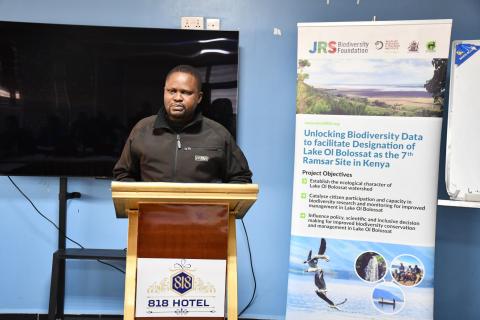
The milestone was achieved during a two-day stakeholders' workshop convened by the East African Wild Life Society (EAWLS) in partnership with the National Environment Management Authority (NEMA) and the County Government of Nyandarua. The workshop brought together representatives from national and county governments, research institutions, conservation organizations, community-based organizations and local communities to review progress in implementing the Lake Ol Bolossat Integrated Management Plan and validate the Ramsar Information Sheet.
The validation of the Ramsar Information Sheet represents a critical milestone in the nomination process, ensuring that the ecological, hydrological and biodiversity significance of Lake Ol Bolossat is comprehensively documented in accordance with the requirements of the Convention on Wetlands (Ramsar Convention). The validated information strengthens the scientific and technical basis for Kenya's proposal to designate the lake as a Wetland of International Importance.
Lake Ol Bolossat is a unique freshwater ecosystem and one of Kenya's most important biodiversity hotspots. The wetland provides critical habitat for numerous waterbirds, including globally significant crane populations, supports diverse aquatic and terrestrial biodiversity, regulates water resources within the Ewaso Ng'iro North Basin and sustains the livelihoods of surrounding communities through agriculture, livestock production, fisheries and nature-based tourism.
During the workshop, participants assessed the implementation status of the Integrated Management Plan, identified conservation and management gaps, and agreed on priority actions aimed at enhancing ecosystem protection, strengthening stakeholder collaboration and promoting the sustainable use of the lake's natural resources.
The initiative contributes directly to the implementation of the Kunming-Montreal Global Biodiversity Framework (KMGBF) by advancing several global biodiversity targets, including:
- Target 1 – Integrated spatial planning and improved management of land and inland water ecosystems.
- Target 2 – Restoration of degraded freshwater and wetland ecosystems.
- Target 3 – Conservation and effective management of areas important for biodiversity through the expansion of protected and conserved areas.
- Target 8 – Enhancing ecosystem resilience to climate change.
- Target 11 – Maintaining and restoring ecosystem functions and services, including freshwater provision and water regulation.
- Target 21 – Strengthening biodiversity knowledge, monitoring and information sharing to support evidence-based decision-making.
- Target 22 – Ensuring the full and effective participation of Indigenous Peoples and local communities in biodiversity conservation and sustainable resource management.
The workshop formed part of the project "Unlocking Biodiversity Data to Facilitate the Designation of Lake Ol Bolossat as Kenya's Seventh Ramsar Site," implemented by the East African Wild Life Society (EAWLS) in collaboration with the Wangari Maathai Institute for Peace and Environmental Studies (University of Nairobi) and the Wildlife Research and Training Institute (WRTI), with financial support from the JRS Biodiversity Foundation.
The initiative demonstrates the importance of science-based decision-making, multi-stakeholder collaboration and community participation in safeguarding Kenya's wetlands and freshwater ecosystems. Once designated, Lake Ol Bolossat will become Kenya's seventh Ramsar Site, joining the country's growing network of internationally recognized wetlands that contribute to biodiversity conservation, climate resilience and sustainable development.
Through partnerships among government agencies, research institutions, conservation organizations and local communities, Kenya continues to strengthen its commitment to conserving wetlands as critical ecosystems that support biodiversity, ecosystem services and human well-being while contributing to national and global biodiversity targets under the Convention on Biological Diversity and the Ramsar Convention.