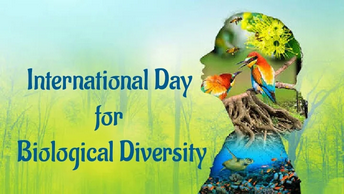
International Day for Biological Diversity (22 May 2026)
The United Nations has proclaimed the International Day for Biological Diversity (IDB) to enhance understanding and awareness of biodiversity issues worldwide and to inspire collective action towards its conservation and sustainable use.
This important day dates back to 1993, when the UN General Assembly designated 29 December—the date of entry into force of the Convention on Biological Diversity (CBD)—as the International Day for Biological Diversity.
However, in December 2000, the General Assembly adopted 22 May as the official date for IDB. This date commemorates the adoption of the CBD text on 22 May 1992 during the Nairobi Final Act. The shift was also practical, as the original date of 29 December coincided with global holiday seasons, making it difficult for many countries to organize meaningful celebrations and public engagement activities.
Biodiversity—short for biological diversity—is often understood as the wide variety of plants, animals, and microorganisms that exist on Earth. However, its meaning goes much deeper.
It includes:
- Genetic diversity: the variation within species, such as different crop varieties and livestock breeds that enhance resilience and food security
- Species diversity: the variety of living organisms within ecosystems
- Ecosystem diversity: the different habitats—forests, wetlands, rangelands, deserts, and agricultural landscapes—where life interacts
These layers of biodiversity are interconnected, forming complex systems that support life, regulate climate, provide food and medicine, and sustain livelihoods.
Theme for 2026: Acting Locally for Global Impact
The theme for 2026, “Acting locally for global impact,” underscores a powerful message:
Global biodiversity goals can only be achieved through local action.
It recognizes the critical role of:
- Communities managing ecosystems on the ground
- Counties integrating biodiversity into development
- Individuals adopting sustainable practices
From restoring degraded lands to protecting indigenous knowledge, local actions collectively contribute to global biodiversity conservation.
n 2026, Kenya will mark the International Day for Biological Diversity on 22nd May in Embobut Forest, Elgeyo Marakwet County—a region that powerfully reflects the theme “Acting Locally for Global Impact.”
Embobut Forest, part of the larger Cherangany Hills ecosystem, is one of Kenya’s critical water towers. It plays a vital role in regulating water flow, supporting biodiversity, and sustaining livelihoods both locally and downstream. The forest is home to diverse plant and animal species and provides essential ecosystem services that contribute to climate resilience and national development.
Hosting the national celebrations in Embobut Forest highlights Kenya’s commitment to restoring and protecting its key ecosystems, particularly water towers that are under increasing pressure from deforestation, land-use change, and climate variability. It also underscores the importance of working closely with local communities, including indigenous peoples, whose knowledge and stewardship are central to sustainable forest management.
The 2026 commemoration will bring together national and county governments, local communities, development partners, civil society, and the private sector to showcase ongoing restoration efforts, promote sustainable land-use practices, and strengthen partnerships for biodiversity conservation.
Activities planned for the day will include tree growing, community dialogues, exhibitions, awareness campaigns, and field demonstrations of ecosystem restoration initiatives. These actions will not only raise awareness but also inspire practical solutions that connect local conservation efforts to Kenya’s national targets and global biodiversity commitments.
By choosing Embobut Forest as the host site, Kenya sends a strong message: protecting biodiversity starts at the local level, and when communities are empowered, their actions can generate lasting impact far beyond their immediate environment.