
Basic Page
Basic Page
Published on
2023 Sep 02About protected areas in Kenya
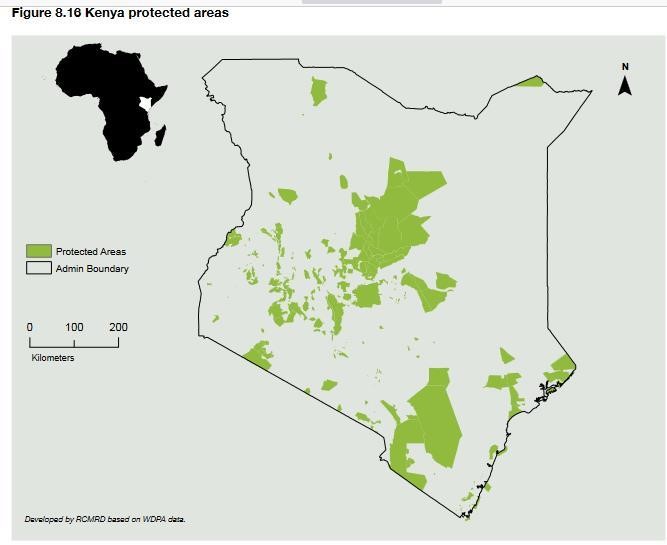
Kenya has 411 protected areas covering 72,545 km2 of land and 904 km2 of ocean (UNEP-WCMC & IUCN (2019i).
The post-independence government inherited four national parks and six-game reserves, gazetted through a parliamentary process. In addition, there are quite a number of game reserves that are under the management of local authorities. There is also a host of privately or/and communally owned wildlife conservancies.
Subsequently, the number of parks and reserves has greatly increased.
Of the 12% of the land designated as protected areas including forests, 50% is found in arid and semi-arid lands. The current trend shows a sharp decline in animal species diversity and population abundance in these ecosystems. Realizing that these protected areas were incapable of adequately meeting biodiversity conservation goals and providing support to livelihoods, the idea of establishing private sanctuaries and community conservancies has
gained momentum over the last few decades in Kenya. These form the lifeblood of the current protected areas system, with more than 70% of all large wildlife living permanently or seasonally outside of protected areas managed by government agencies
About 8% of Kenya’s land mass is a protected area for wildlife conservation. Protected areas are gazetted landscapes/seascapes that have been surveyed, demarcated, and gazetted either as National Parks and/or National Reserves. In Kenya, Protected areas embrace various types of ecosystems namely: forests, wetlands, savannah, marine, arid and semi-arid. The protected areas comprise of 23 terrestrial National Parks, 28 terrestrial National Reserves, 4 marine National Parks, 6 marine National Reserves, and 4 national sanctuaries. In addition, KWS manages over a hundred field stations/ outposts outside the protected areas. As noted above protected areas in Kenya are categorized either as parks or reserves. The distinction between the two categories is: in parks, there is complete protection of natural resources and the only activities allowed are tourism and research. On the other hand in reserves, human activities are allowed under specific conditions. These activities are for instance fishing in marine reserves or firewood collection in terrestrial reserves. It is worth mentioning that a lot of Kenya’s wildlife lives outside Protected Areas, this is because most of the protected areas are not fully fenced, and hence wildlife moves in and out of these areas in search of pasture and water during certain periods within the year. When they move out of the protected areas, they interact with people on private and community land causing human-wildlife conflict. This, therefore, requires that KWS embraces a strategic partnership with communities living in wildlife areas.
Kenya has a large diversity of ecological zones and habitats, including lowland and mountain forests, wooded and open grasslands, semi-arid scrubland, dry woodlands, inland aquatic, as well as coastal and marine ecosystems.
Kenya’s protected area system consists mainly of wildlife-protected areas (WPAs) and forest-protected areas (FPAs). These two major types of protected areas cover about 10% of Kenya’s 582,646 km2 land mass. Of the 10% protected area to cover, 8.2% belongs to WPAs while 1.8% belongs to forests. It is, however, useful to note that WPAs and FPAs are not completely separate entities. There are several cases in which these two protected area types overlap. Of the 8.2% of Kenya’s land mass that is WPAs, 8.04% (46,897 km2) is occupied by terrestrial parks, reserves, sanctuaries and conservancies while 0.13% (776 km2) is occupied by marine parks and marine reserves
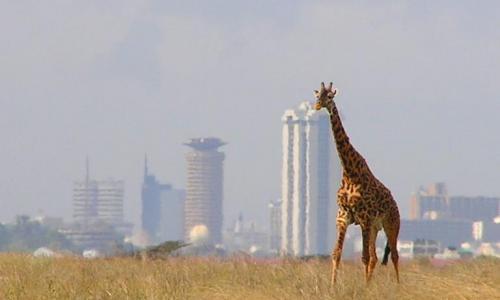
Transboundary protected and conserved areas Kenya includes part of five transboundary conservation areas,
namely: i) Amboseli-Kilimanjaro-Longido, ii) Mount Elgon, iii) Serengeti-Mara, iv) Tana-Kipini-Laga Badana Bushbush Land and Seascape, and v) Tanga Marine Reserves System and Tanga Coelacanth Marine Park and Diani Chale and Kisitee-Mpunguti.